Overview
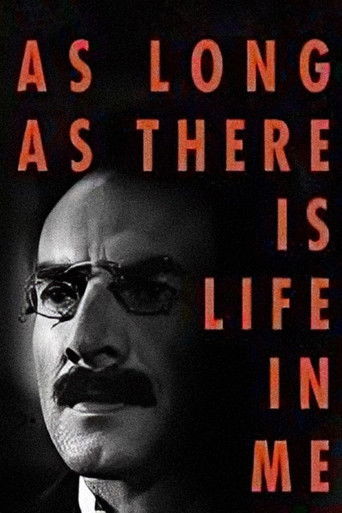
This is part one of a two-part biopic about Karl Liebknecht. In 1914, Germany is arming itself for war. Karl Liebknecht, left-wing revolutionary Social Democrat, workers’ leader and a virulent antimilitarist, is one among 110 SPD members of Parliament who vote against approving war loans. From then ...
Cast

Horst Schulze
Karl Liebknecht

Lyudmila Kasyanova
Sophie Liebknecht

Mikhail Ulyanov
Frolow

Albert Hetterle
Paul Schreiner

Erika Dunkelmann
Milda Schreiner

Jutta Hoffmann
Käthe Schreiner

Stefan Lisewski
Werner Gutjahr

Albert Garbe
Albin Holzer

Fred Delmare
Waldemar Lehmann

Wolfgang Ostberg
Ernst Lemke

Hans Hardt-Hardtloff
Tischler

Mathilde Danegger
Seine Frau
Introduction
In this latest movie review, we dive deep into As Long as There’s Life in Me (1965), exploring its intricate plot and standout performances that have everyone talking.
This is part one of a two-part biopic about Karl Liebknecht. In 1914, Germany is arming itself for war. Karl Liebknecht, left-wing revolutionary Social Democrat, workers’ leader and a virulent antimilitarist, is one among 110 SPD members of Parliament who vote against approving war loans. From then on, he is considered un-German and a traitor to the fatherland, and his own party’s leadership turns against him. Despite threats, Liebknecht speaks up against the war and writes the manifesto “The Main Enemy Is at Home.” Even when he is arrested and charged with treason, he does not surrender.
🛑 Story ExplainedSpoiler Warning
Our story explained section breaks down the complex narrative of As Long as There’s Life in Me. The full story follows a progression that challenges typical tropes, leading to a climax that requires careful analysis.
🏆 Final Verdict
5 / 5 Stars
A triumphant piece of cinema that blends gripping narrative with breathtaking visuals.